
55th Wing, Air Combat Command
Flight Level 27, Southern Arizona
The RC-135W Rivet Joint was an old aircraft. Based on the same platform as the original Boeing 707, the plane was old, and the design was old. However, like all the C-135 derivatives in the USAF fleet, the “Rivet Joint” fleet had received new engines and avionics a few years back and was expected to fly for another twenty years.
Little known, the 55th had directly participated in every single combat operation the United States had been involved in since WWII. During the Global War on Terror, the “Rivet Joint” aircraft had flown thousands of sorties doing exactly what the aircraft was doing right now: searching for the enemy by tracking their electronic emissions. With two RC-135Ws cooperating like they were doing now, very precise locations could be developed, tracking down to individual handheld radios or cell phones. It was a mission they had performed over Iraq and Afghanistan but never in North America, until now.
“Whisky Zulu, Burning Wind.”
“Burning Wind, go for Whiskey Zulu.”
“We are confirmed. RED BEAR is confirmed and position verified. Tracking data is live on the net now.”
“Affirmative, Burning Wind, we have the feed.”
944th Fighter Wing, 52nd Squadron, Air Combat Command
Flight Level 34, Northern Mexico
Lt. Colonel Nguen stretched in his ejection seat. While this mission was relatively short, nobody ever described an ejection seat as comfortable. Having only taken over command of the 944th a few months ago, he was just now becoming comfortable with the 52nd. He glanced over to his right. His wingman was comfortably tracking along, exactly where he should be just off his right wing.
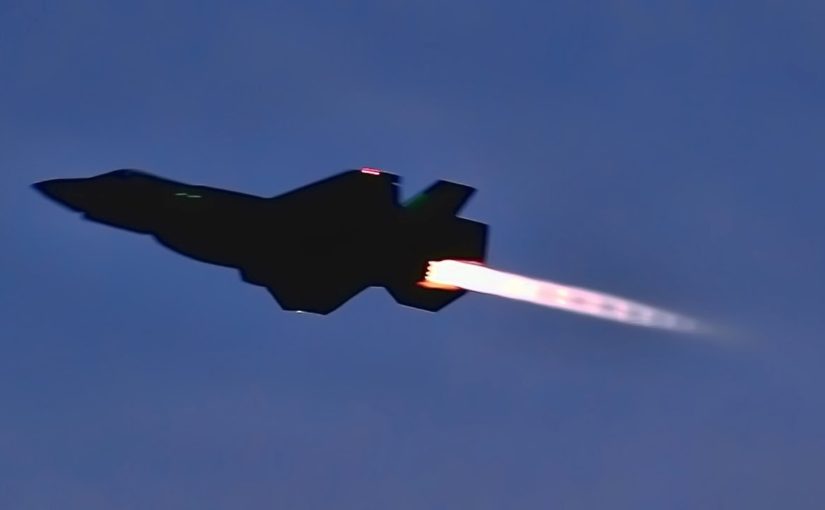
The “Battle Penguin” as the F-35A was sometimes known wasn’t the sleekest aircraft Nguen had ever flown. It looked a bit rotund for certain. However, it was deadly, and he enjoyed flying it. The crews called it the “Panther” which seemed like a much more appropriate nickname.
He looked down at his instruments again. They were tracking half a dozen radio sources inside of Mexico. He actually didn’t know exactly how the targeting data had been developed, but he assumed via aircraft. At 3am, the radio sources were mostly quiet but most importantly, they hadn’t moved in at least three hours. The assumption was that this meant the units carrying those radios had bedded down for the night.
As he flew above the target site, he examined it on his EOTS system. The IR camera installed in the nose of the F-35 lived under a faceted low observable window just under the aircraft’s nose. At the moment, it was showing him a compound in the desert. Four buildings, including two which looked like hangars, could easily be seen on the screen. Assigning a JDAM to each, he handed off the actual bomb release to other members of his squadron. Unlike older aircraft, the F-35 was specifically designed to work in groups. The twelve aircraft of the squadron all shared a common picture of the battlespace and automatically shared targeting information. By indicating a target on his screen, he could assign that target to another member of the squadron.
In this case, four separate laser designators flashed down from four separate aircraft. Each building was designated separately with a coded laser beam. In turn, four Laser JDAM smart weapons were programmed to seek out that coded laser. One at a time, four weapons were released. Nguen watched with cool detachment as the four buildings were completely destroyed.
“Whisky Zulu, Ninja One Niner. Target eliminated, RTB.”
“Roger, Ninja, well done.”
Nguen was pleased with the performance of his pilots and the entire team that made the attack work. As he flew home, he was completely unaware of the catastrophic events that his attack would cause.