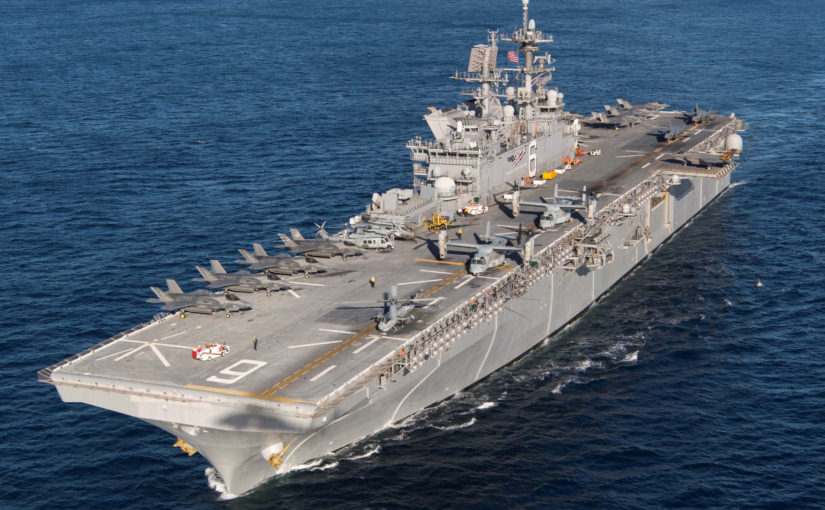
US Navy, Third Fleet, embarked USS Bougainville (LHA-8)
50 NM Southwest Catalina Island, California
Lensten looked over the Army Special Forces captain in front of him. He had managed to get a proper uniform somehow, but he looked like he hadn’t slept in a week. Which was pretty good—Lensten felt like he hadn’t slept in a month.
“Peters, what do we know from our guest?”
“He is a PLA captain. Regular army. Runs the motor pool. Claims to know nothing about the invasion. He was part of the peacekeeping force sent before this all went south.”
“And you believe that?”
“He’s telling the truth.”
“How hard did you press him?”
Peters just glared at the admiral. Not the way junior officers normally looked at flag officers. There was a tense moment of silence. “Sir, there are questions you should not ask me.”
Lensten held the angry gaze. Finally, he nodded. “Understood.” He looked down at the map in front of him. “So, what is this then?” It was covered in Chinese writing. Something nobody on the ship had been able to read when the prisoner arrived. A massive oversight, to be sure, but one that had finally been rectified by flying in a Mandarin-speaking intelligence officer from the Language School in Monterrey.
Peters smiled. “It’s the map of the motor pool.”
Lensten looked again. “This isn’t Mexico.”
“No, sir, that’s Terminal Island.” Peters shook his head in disbelief. “That is the port of Los Angeles.”
Finally recognizing what he was looking at, Lensten examined the map more closely. “And what are those lines?”
“Those are the lines of occupation.”
“Lines of occupation?”
“Where his soldiers are allowed to go without escort.”
“What the hell?”
“I’ve had a little time to think about this.” Peters jabbed a finger on the map. “This is Hong Kong.”
If anything, Lensten looked even more confused. “I don’t follow.”
“Think about it, sir, what is the one thing that the Chinese government fears?”
“Clearly not World War Three.”
“No, it’s the loss of autonomy. Like the Century of Humiliation.”
Lensten could hear the capital letters when Peters talked about the Century of Humiliation. “You are an expert in Chinese history now?”
“I had plenty of time to read once I left the Army. I wanted to know why we fought the last war.”
“And this one?”
“I don’t think it’s any different. The Chinese want to have autonomy. They thought that owning the South China Sea gave them that autonomy.” Peters gestured at the map angrily. “Look, the Chinese government isn’t aggressive. They’re not seeking lost empire like Russia is. They just want to keep control of their own country. Controlling the SCS allowed them to do that.”
“But that plan didn’t work out.”
“No. So now they want to establish an outpost on US soil to defend their rights.”
“Isn’t that what the European powers did?”
“Exactly. Hong Kong, Macau, Shanghai, they were all occupied at one time or another. The Europeans wanted to control trade in and out of China, so they took over the ports. The Japanese did something similar before they invaded.”
“So, they know this works because it was done to them.”
“Exactly. China knows they have no hope of actually invading and occupying the USA. It’s too big. None of this makes any sense. If anything, the Chinese government is one of the most rational governments in the world. Extremely pragmatic. Why would they invade at all? Clearly, they could not win.”
“But they could hold the port.”
“Yes, exactly. Make it a fait accompli and then negotiate.”
“And they know that the President will fold when pressed.”
“Yes, just like when he was in office before. They know he will fold, and they will keep the port.”
“No more tariffs.”
“Nope. Not with them controlling the largest port on the West Coast.”
“I need to call NORTHCOM.”