III Marine Expeditionary Force
Camp Courtney, Okinawa Prefecture, Japan
“Sir, the commandant for you.” General Craig looked up, surprised at the interruption from Gunnery Sergent Tsosie. The grizzled gunnery sergeant looked unsettled. The grey-haired Navajo was the latest in a long line of Marines from his family. His grandfather had been a “code talker” during World War II. It was disturbing to see a pillar of the Marine Corps so unsettled and confused.
“Sergent Tsosie, are you squared away?”
Almost without thought, Tsosie straightened up and nearly came to attention. Twenty-five years in the Marines made some responses automatic. “SIR! Yes sir! We are good to go.”
The general smiled with little humor. Everyone was tense after the flood of conflicting orders and the reports of their brother and sister Marines under fire in California. III MEF was one of the premier striking forces in the US arsenal. The Marines wanted to fight and had spent a frantic two days preparing to deploy the entire unit back to the United States. Then Pacific Command had gone off the air, and they had been ordered by the Chairman of the Joint Chiefs himself to stand down. Everyone on the base was confused. The General Craig was just angry with the entire situation. He picked up the secure phone. “Craig here.”
The voice on the other side was crystal clear due to the digital transmission system used by the DOD. Craig didn’t know the details and really didn’t care but one of the few things working well since the attack on the United States was the complex network of undersea fiber optic cables. Unlike units engaged in combat in California, he had a direct link to the Pentagon. The mysteries of technology he thought to himself. “Craig, Ruiz. Do you recognize my voice?”
“Yes, sir.”
“Very well. Due to the ongoing communications issues, your command has been chopped to report directly to me. You will disregard standing orders and proceed to implement operation Shortstop. Chain of command is removed in this case; you are not to report to Pacific Command or any other theater-level command unless directed so by me.”
“Communication issues, sir?”
“Yes, by issues, I mean that Pearl is blown the hell up and as far as we can tell all of PacCom leadership with it.” There was an unexpected pause. Craig had talked to the commandant a total of five times in his career. Each time the man had been in a hurry, words flooding out, with no hesitation. Now, he seemed uncertain. “Will, your written orders will tell you to support JDF in evacuating Yonaguni as a precautionary measure. What I am about to tell you is the real reason. You cannot discuss this with anyone on your staff and for God’s sake don’t say anything to the Japanese about internal issues.”
Craig realized he was about to find out why he had been sitting on his ass since the balloon went up. “Yes, sir.”
“We have intel that says the current administration is compromised. We have been trying to organize defense of CONUS but we are getting pushback from various sources. I am working with Northern Command directly to resolve this issue. In the meantime, we know that the Chinese are pushing supplies, weapons and ships across the Pacific from Fujian province. All those supplies go right by Yonaguni. You are to interdict all Chinese air or sea traffic within five hundred miles of Yonaguni.”
While Craig was shocked at the revelation, it did explain the confusing lack of orders and the way the mission was being communicated to him. It was a mission that III MEF had trained for. “Sir, we have a detachment there now to liaise with the JGSDF 15th Brigade.”
“Yes, Craig, I am aware. We do occasionally read your reports here in the Pentagon.”
“Yes, sir. Sorry, sir.”
“To repeat, you are to hold Yonaguni at all costs. We need to get China’s attention away from California so we can counterattack.”
“Understood. We won’t let you down.”
“Never entered my mind. Semper Fi.”
“Semper Fi.”
Craig hung up the phone. He stared at the phone for a moment, too stunned to act. Then he smiled; he had a mission! “Tsosie!! Get your ass in here! Time for us to get into this Goddamn war!” It took him a full five minutes after issuing orders to mobilize the MEF to realize what Ruiz had implied. “Pushback from various sources” could really only mean one thing: the president or his appointees were not allowing the military to defend the USA properly. Did that imply that his secret instruction from Ruiz was meant to circumvent the authority of the president of the United States? He carefully set that thought aside. If he believed that Ruiz had ordered him to contravene the will of the commander in chief, the orders would be illegal. No, he had to assume Ruiz knew what he was doing. Ruiz was the commandant of the entire US Marine Corps. Craig couldn’t believe that Ruiz would mutiny. Besides, the order made total sense. Interdict shipping to support the troops in contact. He had a valid order from a superior officer. He would carry it out or die trying.
III Marine Expeditionary Force
Yonaguni, Okinawa, Japan
General Craig stepped off the Osprey and walked to the welcoming committee of Japanese soldiers. They wore standard JDF camouflage, similar to USMC MARPAT, but greener in tint, making General Craig look a little grey in comparison. Craig quickly recognized their commanding officer who was standing with a slight scowl. Approaching the Japanese Ground Self Defense Force (JGSDF) general, he offered a crisp hand salute, stopping a precise four feet away and making direct eye contact. “Ohayo gozaimasu, General Akagi. It is an honor to meet you.” Lowering his hand and reaching into his pocket, he withdrew an official Marine Corps business card which he had never once used when stationed in the USA, but which was critical in Japan. Carefully holding the card in both hands and turning it so the Japanese general could read it before taking the card, he formally presented it to the Japanese general. He offered a slight bow while doing so, just a bend at the waist and a slight nod of his head, showing proper respect due a fellow senior officer.
Apparently surprised to meet a polite US Marine, the Japanese general paused for a moment but then reached into his own pocket for his own card. Carefully offering his in turn with both hands and bowing slightly, the two soldiers completed the ritual so common in Japan, but decidedly not normal in America.
Craig waited, hiding his impatience. He was a guest here and he badly needed Japan’s support for this mission. Finally, the Japanese general spoke, his English accented but easy to understand. “I have just spoken to the prime minister herself. She has instructed me to ensure that my command fully supports Japan’s commitments under Anpo.” The Treaty of Mutual Cooperation and Security between the United States and Japan, more commonly known as the U.S.-Japan Security Treaty in English and as the Anpo jōyaku or just Anpo in Japanese, was signed in 1960 and was the oldest currently operating security agreement among major nations. While it had been wildly unpopular in Japan when signed, it had become a foundation of US-Japanese relations over the years. The Japanese took their treaty obligations very seriously.
General Craig nodded gravely. This was very serious business to the Japanese, a matter of honor and obligation. Something he would have said about his own country as well, until recently. “I have been asked to convey the deep gratitude of my government for your support in these troubling times.”
The Japanese officer gestured for his aides to step back, giving the two men a small modicum of privacy on the tarmac. The noise of the still running Osprey would make it impossible for anyone to overhear them. “General, is our intelligence correct that Pearl Harbor has been completely destroyed?”
“Yes, sir. I regret to tell you that this is the case. Our Pacific Command Headquarters was almost completely destroyed. There are some survivors, of course, but the entire command staff was killed by a direct hit.”
“And SacPac?”
Of course, the Japanese knew about The Admiral. “I’m sorry sir, but he is listed as KIA.”
The Japanese officer’s face compressed into a tight line. The Japanese attack on Pearl Harbor in 1941 and the atomic bombings of Japan in 1945 were critical events to both countries for different reasons. After World War II, Japan had become a deeply anti-war country while the USA had maintained and even expanded their military hegemony in the Pacific. It had taken fairly severe provocation from China for Japan to begin to shift that anti-war stance. Even so, the Japanese were much less likely to resort to military force than most other powerful countries and they didn’t have nuclear weapons, something that was banned in their constitution. Of course, their current constitution was largely written by Americans during the post WWII occupation. The relationship between the former enemies was complex, to say the least. Now, the USA needed Japan’s help to fight a war in the Pacific. The irony of the current situation was not lost on either officer. Nodding once, Akagi gestured for his aides to return. “General, welcome to Yonaguni. My forces here are at your disposal.”
Craig offered his hand with a smile. “Thank you, sir, it is truly my honor to be here. May we begin?”
After a slight hesitation, Akagi shook the offered hand. “You may commence.”
Craig nodded and turned back to the silently waiting Tsosie. “Give the go.”
“Aye, Aye, sir.” Turning quickly, Tsosie jogged to the Osprey which was fully equipped as a flying command post. A dozen C-130 cargo aircraft were already in the air, carrying the lead elements of the III MEF. They were followed by two squadrons of F-35Cs and two squadrons of Air Force F-15s from Kadena. Craig was fairly certain that they could defend local airspace with all that firepower. What he wasn’t certain about was defending from incoming ballistic missiles. In theory, the Japanese Chu-SAM batteries deployed on the island were similar to the US-made Patriot, however the system was untested under combat conditions.
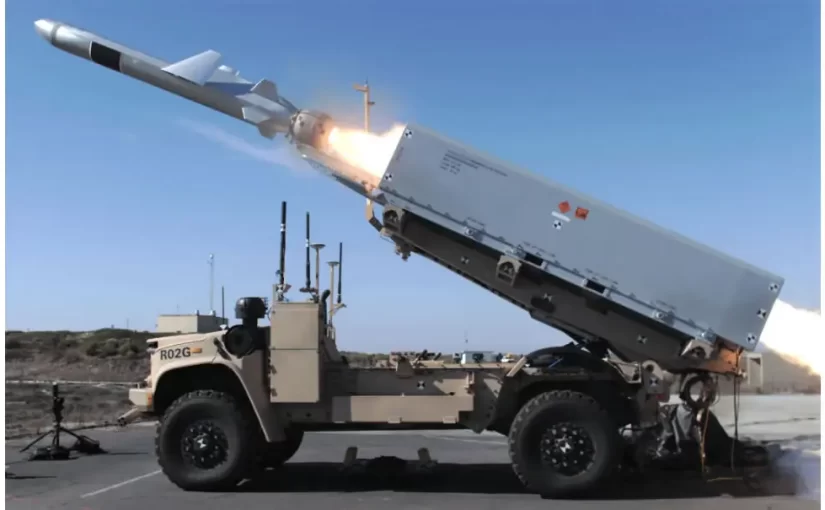
For this reason, the plan was to spread his force across the island, making it harder for attacking forces to suppress the anti-ship capabilities that they planned to deploy. This is why the first two planes contained a NMESIS battery and the next four contained HIMARS launchers. The Marines had spent the past four years preparing for just this type of fight. NMESIS gave them the ability to attack ships far out to sea and the proven HIMARS system allowed them to defend the island against any potential invasion. The Marines had always been about highly mobile firepower, but the latest iteration of the Marine corps was even more mobile and more lethal than ever. This little island was about to be armed to the teeth.
I am very familiar with Japanese culture (worked with Sony for almost 15 years, and went over 30 times to Japan), so just one very small detail, but just to make it more accurate, General Craig should hand General Akagi the business card WHILE bowing, not after. Makes it more formal in Japanese culture. Also, the card should be facing Akagi (so he can read it even before taking it). Likewise, Akagi is now forced to bow back when handing his card (otherwise, it would be disrepectful). You are correct in handing it with both hands.
Thanks!!! I was very nervous about this scene. I’ve seen this done, but I’ve not done it myself. I’ll update it.