Secretaria de Marina
Mexico City, Mexico
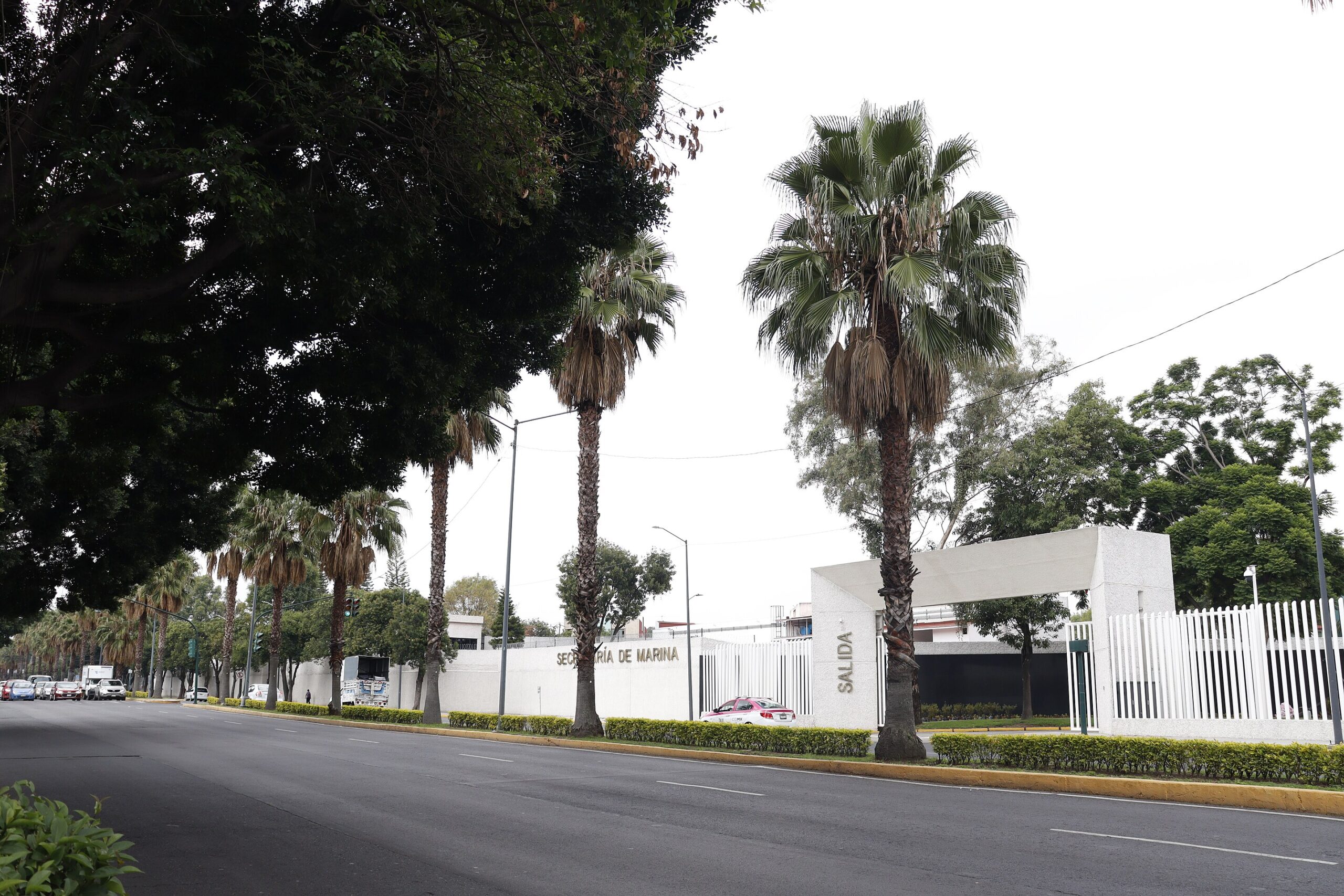
Entering the naval headquarters building using the discrete gate seven always felt like sneaking into school for Bustamante. Unlike the main entrance on the other side of the complex, gate seven only had a large painted anchor sitting outside to indicate what the building was for. The residential area across the street looked like a typical Mexico City neighborhood, completely different from the isolated Pentagon where the US Navy had their headquarters. And in typical Mexican fashion, this was the headquarters for the Navy only, not the Army.
Passing through the security checkpoint, Bustamante noticed a much higher level of tension than normal. The Marinas guards were tightly gripping their M4s and were paying very strict attention to the metal detectors and bomb sniffers— something that wasn’t always true, even here at the home of the Mexican Navy and Marine Corps.
Slowly walking up to Admiral Rodriguez’ executive briefing room, Bustamante was lost in thought. The reality that Russians were operating so blatantly in his country was troubling. What was more troubling was the certain knowledge that there must be members of his own government who were in collaboration with these foreigners. Perhaps even members of the military, which was a shocking thought to the commander. While corruption was a constant irritant to the Mexican government, outright treason seemed beyond belief. Despite his agreement with Park, the details of the engagement in the Sonoran Desert had gotten out. He had been instructed by Admiral Rodriguez not to discuss the mission, but that didn’t stop the rumor mill. Like any military organization, news traveled fast, but not always the news the brass wanted you to know. Of course, he had filed a mission report which was supposed to be secret, but who knows how many people had seen it.
Unlike the rest of the relatively austere government building, the executive briefing room was ornately furnished with dark wood paneling and comfortable leather chairs for the flag officers present. Bustamante took two steps into the room and froze. There was an Army general talking to the admiral. Bustamante hadn’t expected anyone from the Army to be present. The Mexican Navy was fiercely independent and didn’t fall under the Secretary of Defense like most western navies.
Their conversation finished, the general turned so Bustamante could see his face. He was shocked when he realized it was General Trujillo, the Secretary of Defense himself.
Now that the admiral was free for a moment, Bustamante walked up, hand extended. “Admiral, good to see you, sir.”
The admiral gave Bustamante a halfhearted handshake and a scowl. “Bustamante, glad you could spare the time for us here.” They were speaking in Spanish and Rodriguez had used the more formal “usted” instead of the familiar “tú” in addressing Bustamante.
Bustamante was shocked at the cold greeting from his wife’s uncle. They had never been close, but the man had always been pleasant and asked after the children when they had met before. They had entertained the admiral in their home just last month. He was only slightly more shocked to realize there was a piece of paper in his hand after the handshake. Palming the paper, he slipped it into his pocket to examine later.
“Gentlemen, take your seats.”
After a few moments, the audience started to sort themselves out, mostly by rank. As a commander, Bustamante was one of the most junior people in the room which was filled with captains and admirals.
With a loud “bang” the Marine guards closed the doors to the secure room.
General Trujillo strode up to the podium in his usual haughty style. “Gentlemen, what I am about to tell you does not leave this room. Our intelligence has confirmed that the Americans have executed a false flag operation within the republic. For reasons unknown, they have created a false narrative that Russian Spetsnaz units are operating within Sonora and Chihuahua. They have used this flimsy excuse to violate our sovereign airspace and attack Mexican citizens without provocation.”
Bustamante was reeling with shock. First the admiral, now this? Without thinking, forgetting his promise to keep the information secret, he leapt to his feet. “This cannot be correct. I have seen the Spetsnaz troops with my own eyes. They killed six of my men!”
Admiral Rodriguez glared at him with cold disdain. “Bustamante, your ties to the US military are well known. You are relieved of your current assignment. You will report to Admiral Sanchez in the morning. Dismissed!”
Shocked to his core, Bustamante stumbled out of the room, unsure of what to do. Walking down the corridor, he absentmindedly put his hand into his pocket, only to find the paper Rodriques had slipped to him.
“El ejército está comprometido. No confíes en nadie.”
The Army is compromised. Trust nobody.
Swearing, he thrust the paper back into his pocket and quickened his pace. For all he knew there was an arrest warrant out for him. The admiral obviously didn’t want the Secretary of Defense or his people to know Bustamante’s apparent falling out of favor with his wife’s uncle was false. Of course, everyone knew that Bustamante was close to Admiral Rodriques, but his performance was obviously intended to give the impression that this relationship had soured.
But why did he relieve me of my current assignment?
Then he laughed. Of course, with his SEMAR temporary duty assignment ended, he automatically reverted to his base assignment, command of the FES. The admiral wanted him back with his team, which is exactly where Bustamante wanted to be if something bad was going to happen. Clearly, the admiral was extremely concerned. But what about?
Suddenly, Bustamante knew. A coup. This must be a prelude to a coup. Get the military geared up for a fight, pull them into the capitol and push out the civilian leadership. Unlike some other Latin American countries, Mexico had a stable constitutional democracy which had consistently been supported by the military since the revolution in 1917. However, the PRI one-party rule was effectively ended by President Fox in 2000. Since then, things had been unsettled, with control of the country switching between the PRI and rival parties several times. This had led to the civilian government relying more and more on the military to function. Some feared that this could encourage the military to overreach someday. Was that day at hand? Surely not. But why else would Admiral Rodriguez have warned him not to trust the Army? And compromised by whom?
Making his way outside to his official car, Bustamante was very glad he had moved his wife and children to his uncle’s house in Sonora. He suddenly felt very unsafe in Mexico City. Well, it wasn’t the first time he had faced danger and probably wouldn’t be his last. Time to get to work.