Aeropuerto Internacional Benito Juárez, Mexico City, Mexico
It had taken nearly two days, but the US government had decided to evacuate all the casualties from the attack on the Embassy. Ping Pong had remained close to Neil the entire time, not leaving the building at all. She had learned from the staff that MedicaSur was very popular for Americans seeking cheaper surgical options. So called “medical tourism” was a real thing and MedicaSur was staffed up to ensure that these foreign patients were well treated. As a result, she had a very comfortable two days despite her worry over her husband.
He had regained consciousness within hours but was still a bit vague, suffering from both blood loss and a severe traumatic brain injury (or TBI as the staff called it). When the call came that Neil was to be evacuated to Walter Reed in Washington DC, she was relieved even though she didn’t think there was any lack of care he was receiving. Her biggest concern was the news reports of violence in Mexico—demonstrations against the United States, even a few full-on riots in northern cities. Mexico was feeling less and less safe.
On schedule, two marinas came into Neil’s room with a wheelchair. “Admiral, we have been ordered to escort you to your plane which is waiting for you at AICM.”
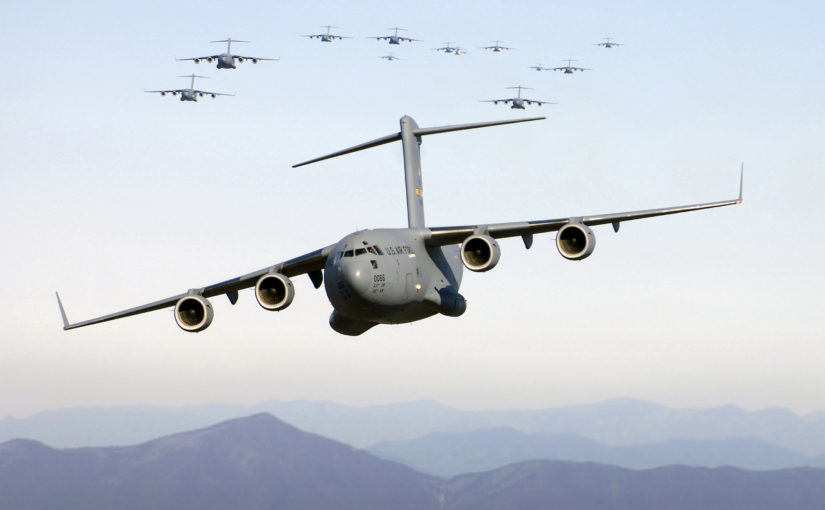
The US Air Force had flown in two C-17s the night before into Mexico City’s larger airport, Benito Juarez. Most locals called it AICM though. Ping Pong helped Neil into the chair. The fact that he didn’t complain about being helped just showed how badly he was feeling.
The military ambulance was basically just a Hummer with a shell on the back. Not very comfortable, but Ping Pong was glad to have two armed marines up front. Halfway to the airport, she realized she was still carrying the pistol she had taken from the US marine two days ago. I wonder if we will go through security?
She needn’t have worried. The ambulance went through a side gate, directly onto one of the many aprons at the sprawling facility. She immediately recognized the hulking C-17s sitting side by side on the ramp. A nice bird, but she preferred her P-8. Getting out, she realized that there was an entire platoon of marinas guarding the perimeter.
A uniformed Air Force nurse unceremoniously took charge of Neil, leaving Ping Pong standing on the ramp. She’d been informed previously that dependents were being sent out on commercial flights. Hers was scheduled for the next day. Silently, she watched as the C-17s loaded up, raised their ramps and slowly taxied to the runway where they took off with a deafening roar of jet engines.
Turning back to the still idling ambulance, she noticed a familiar smiling face. “Carlos! What the hell are you doing here?”
The Marine officer came over and offered a friendly hug. “Señora Harris, you know that AICM is run by the Navy, no?”
“Oh, yes, I guess I heard that.”
“Yes, and when my admiral heard that your admiral and the other casualties were being flown out today, he asked me to ensure their safety.”
“He did, did he?”
“Yes, Señora.”
“So, your duty is done here then?”
“Yes, we are done for today. I was about to dismiss my men to quarters and head home.”
“To your wife?”
“She is visiting my uncle in Sonora, Señora.”
“She is?”
“Yes, with the children.”
“Oh, I see.”
“And you, Señora?”
“Back to the apartment, I suppose. I haven’t been there since the attack.” She looked around. The ambulances and most of the other vehicles had left, leaving only the commander’s official vehicle. “But I think my ride has left.” She put her head into her hands. After all the stress and worry of the past two days, this seemingly minor matter of getting a ride was about to break her. She wasn’t sure if she was going to scream or cry, but something undignified was going to happen.
“Señora Harris.” Ping Pong raised her head and gave him a dangerous look. “Ping Pong. Mexico City is no longer safe for you, I am afraid. I think you should leave immediately.”
“Navy don’t run.”
“Sorry?”
“Carlos, I’m not good at running away. Right now, all I want to do is find the fuckers who hurt my husband and kill them.”
She gave Bustamante a hard stare, daring him to laugh at her. He didn’t. “But I can’t do that, so I don’t know what to do.”
“Ping Pong, would you do me a great personal favor?”
“What?”
“Please come and be my guest at my house. It is secure and my trusted men are watching it.” Ping Pong just stared at him. Is he putting a move on her? Now? “My daughters are not home. There are two very comfortable bedrooms and they have their own bathroom you may use. If you wish, I will stay with my men at the barracks.” He gently took her arm. “But please, do not go back to your apartment or the embassy. There are armed men roving the city.”
The look of absolute conviction shook her. He was a professional soldier, a man used to risk, and he looked genuinely worried. She didn’t know him amazingly well, but he didn’t strike her as a man who worried over nothing. Strangely, she felt safer with this Mexican officer she didn’t really know than she did with her own people from the embassy.
Reaching a decision, she nodded, still unsure of his motives but trusting him.
Returning to Carlos’ town house in a fashionable neighborhood of Mexico City was like entering a dream world. Unlike the chaos of the Embassy attack or the clean but sterile environment of the hospital, this felt like… home. She once again found herself sipping tequila in the home’s beautiful walled courtyard. There was a low buzz of humanity outside the walls, but the plants and the tinkling of a fountain were amazingly calming.
Carlos came out to join her after cleaning up the kitchen from their simple dinner. She had tried to help but he insisted his wife would kill him if he allowed a guest to do dishes in their house. “I am sorry, my wife took the staff with her, so you had to eat my cooking.”
Ping Pong laughed for the first time in days. “Better than mine. Neil is the cook, not me.”
“You don’t have staff at home?”
She laughed again. “No, not on a Navy pension.”
“But Señior Harris is an admiral, surely he has staff?”
“Yes, of course but that is for official business only, not for things like cooking and cleaning.”
“Ah, yes. Sometimes I forget how important appearances are to your Navy.”
“And not to yours?”
Carlos laughed. “Fair, but I am not a sailor, thank God.”
Ping Pong regarded him over her glass. “So, are you going to tell me the truth?”
Startled, Carlos choked on his Tequila. “Truth?”
“Yes. There is no way a commander who personally reports to Admiral Rodrigues, the officer who oversees the entire Navy, is going to take personal command of an airport security detail. That is insane.”
Bustamante laughed again. “Ah, well, since my demotion I now report back to Admiral Sanchez. He has ensured that I am assigned the most menial details he can imagine.” He sipped his drink with a closed expression. “I am back with FES; no longer on my SEMAR rotation.”
“Demotion?”
“Si, Señora. I was demoted for filing a false engagement report from my mission to Sonora last month.”
“False report?”
“Si. I was accused of falsifying a report of Russian Spetsnaz troops in my country.”
“Spetsnaz?”
“Si. And they were armed with MRO rocket launchers.”
“Rocket launchers?”
“Are you just going to repeat what I say as a question?”
“Did you see the damage to the embassy?”
“Si. It was not a car bomb as has been reported by the army.”
“No, it was not. There were impact craters on the second floor.”
“I am not an expert, but I believe that the seventy-two millimeter rockets fired by the MRO would cause damage like that.”
“Where did this event that didn’t actually happen occur?”
“In Sonora.”
“Where your uncle lives.”
“Si.”
“Where your wife and children are.”
“Si.”
“I would love to meet your uncle.”
“I think he will like you very much.”
“Let’s find out.”