Book 2: Episode 40

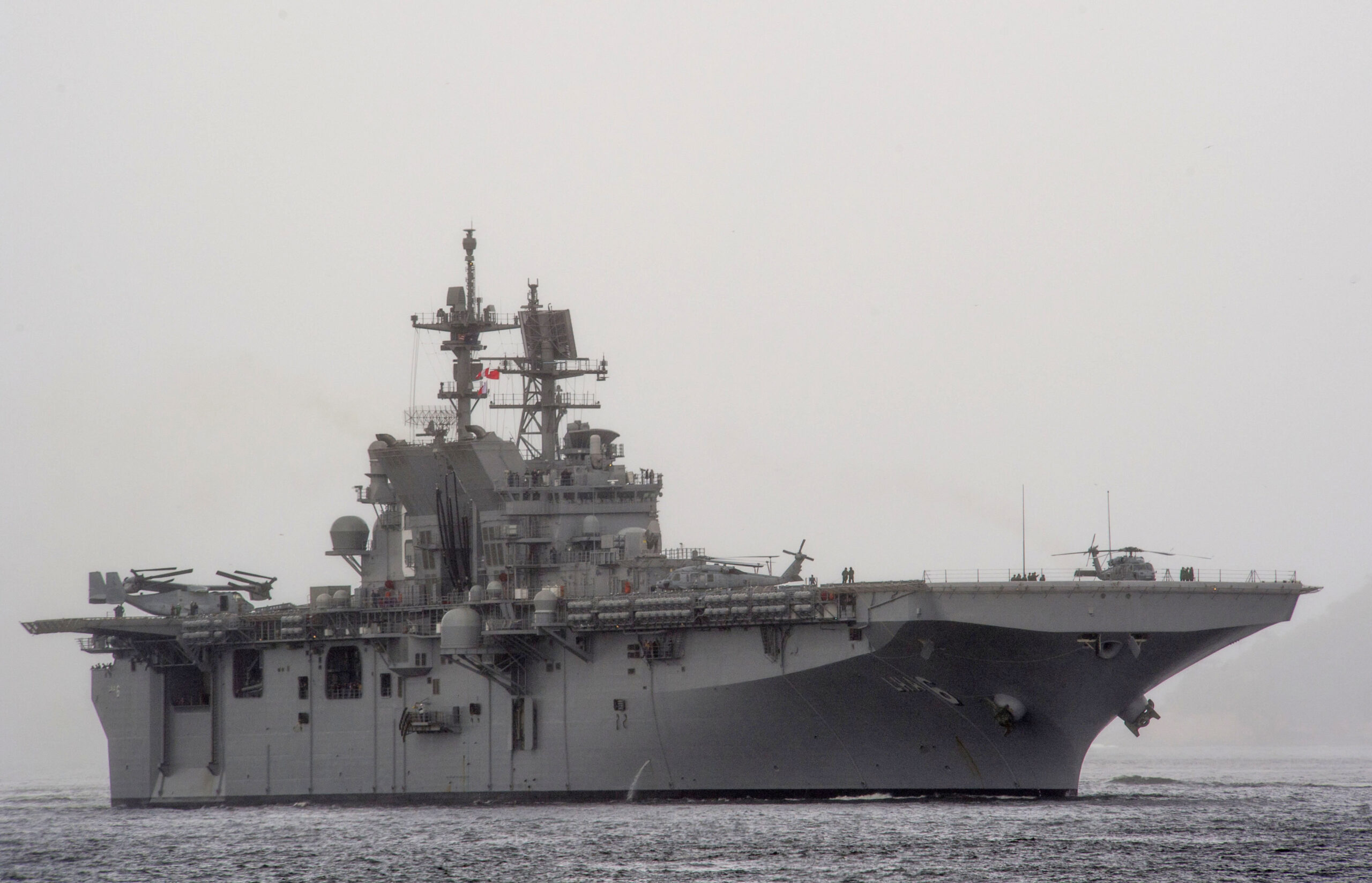
US Navy, Third Fleet, embarked USS Bougainville (LHA-8)

30 NM West Santa Rosa Island, California

“VAMPIRE VAMPIRE VAMPIRE!”

The urgent call startled Admiral Lensten out of his review of the reports trickling in from various units under his command.  “REPORT!”

“We have six, check, seven, cruise missiles three zero miles south.  Heading nine zero at two hundred knots.”

“Heading east?  Towards LA?”

“Yes, sir.”

“Ops, what do we have that close to the coast?”

“Nothing, sir.”

“What the hell are they shooting at?”

“Sir!  I have multiple large commercial ships on that heading.”

“Tankers?”

“Yes, sir, I think so.”

Once again, the Chinese had gotten ahead of the game.  Instead of attacking the small naval flotilla currently forming up off the California coast, they had decided to go after the huge, slow moving oil tankers that provided the majority of the oil that California and the West Coast depended on.

“Ops, track their flight back.  I want a P-8 to prosecute that contact.  Those missiles must have come from a submarine.”

“On it, sir.”

“Air commander, any chance of an intercept?”

“Working sir, but unlikely.  Without airborne radar the engagement envelope is just too small.”

“Dammit.”

The successful attacks on the West Coast included Point Magu which happened to be where all the E-2 Hawkeye aircraft on the West Coast were located.  The USAF had also lost the majority of their larger E-3 Sentry aircraft also, leaving the West Coast of the United States wide open to this type of attack.

“OK, we do it the old-fashioned way.  I want a plan for RADAR pickets from the Mexican border all the way up to the Golden Gate.  Reshuffle the sailing orders and get a line of Burkes out there.”

“Yes, sir.”

The Arleigh Burke class was an excellent RADAR platform, but it couldn’t compete with an airborne radar.  The curvature of the earth meant that any sea-level system had a significantly smaller horizon than an airborne radar.  However, it was better than being completely blind to incoming threats.

Lensten ran his fingers through his thinning mouse brown hair.  He was still processing the death of The Admiral.  Effectively, his request for help to The Admiral had led directly to his death.  He carefully locked his emotional response in a box, a trick he had learned in combat.  He knew he would pay the price later, but today he needed to focus on the mission at hand.
Book 2: Episode 39

79th Infantry Brigade Combat Team (California National Guard)

San Diego, CA

Colonel Banguey picked up the secure radio.   “Banguey.”

“Ident, Whiskey Sierra Whiskey.”

Banguey had to consult with a card from his pocket for today’s recognition codes.  “Bravo Echo Foxtrot.”

“War Plan Ardent Resolve in effect.  Your command is to prevent possible enemy incursion into the Los Angeles basin via I-15.    You are to defend the I-15 corridor at all costs. Readback.”

Automatically, Banguey repeated, “79th to take a blocking position on I-15 to prevent enemy incursion into the Los Angeles basin.  Defend at all costs.”

“Readback correct.”  The handset in his hand went dead. 

Numbly, turned to his Command Sergeant Major.  “We are to defend the Los Angeles Basin.”

“What the fuck?”  While Command Sergeant Major Selston was under the command of Colonel Banguey, he often thought of himself as a partner in crime rather than as a subordinate.  The Colonel was a good boss.  He made sure that the unit maintained good discipline but wasn’t focused on the spit and polish that so many reserve officers focused on.  “Sir, are we really going to retreat before we even get into the war?”  He pointed south.  Tijuana was only a dozen miles away.  “The bad guys are over there!”

Banguey sighed.  “I don’t like it either, Larry, but it makes sense.  We are wide open here.  Most of the brigade won’t be down here for another full day.  If the ChiComs decide to roll over the border, we are not stopping them with a single cav squadron.”  He consulted a map.  “Here, if we set up on I-15 just south of Temecula, we can defend the pass there and prevent any movement north.  If and when we get the whole brigade online, we can think about moving south again.”

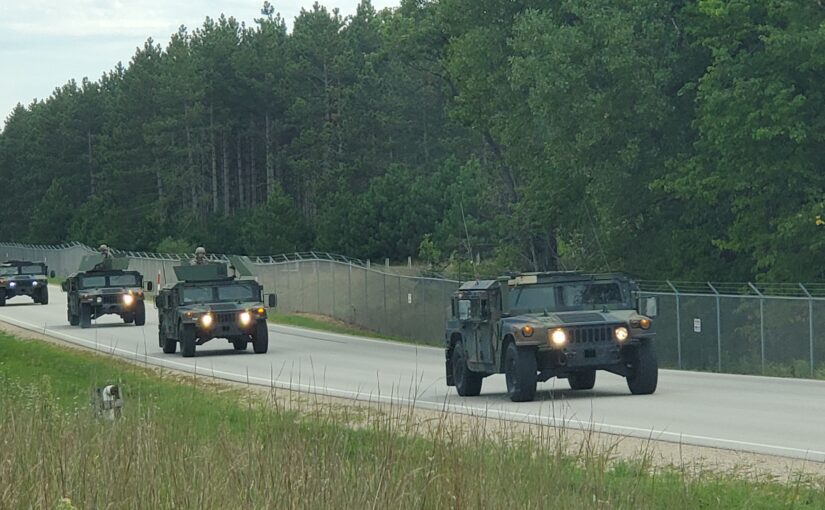
Selston looked at the map.  “I think we should position here.”  He pointed to a section of I-15 just two miles south of Temecula.  “The 15 goes through a little valley here.  We set up arty on one end, put some hummers up on the hills with TOWs and it’s a tough position to assault from the south..”

“Agreed.  Make it happen.”

Pulling out of their HQ in San Diego, the officers and men of the 79th could clearly see the smoke rising from the ruins of Naval Base San Diego and Coronado just beyond.  The surface streets and freeways of San Diego were deserted; most civilians had heeded the order to “shelter in place.”  It was eerie to see a major US city nearly deserted.  As they started up I-15, their path went just past Miramar, a similarly disastrous sight.  It was with grim faces that they navigated their way north, away from the enemy and away from their homes and families.